

Your shopping cart is currently empty.
Antimalarial
What is malaria?
Malaria is an infection caused by the protozoan (single cell) parasitic organism Plasmodium that is transmitted by an infected mosquito and enters the blood from a mosquito bite. The plasmodium parasite has a complex life cycle, which begins in the mosquito and continues through several stages in humans. When inject into the blood through a mosquito bite, the sporozoite stage of the plasmodium parasite migrates to the liver where it multiplies and is then released back into the blood stream developing into merozoites. The merozoites infect red blood cells, where they multiply and develop into trophozoites and schizonts, which cause destruction of red blood cells. Some merozoites develop into gametocytes, the sexual form of the parasite, which are taken up by a mosquito when feeding on blood and develop into sporozoites in the salivary gland of the mosquito, ready to begin a new life cycle.Symptoms of malaria usually appear within 10 to 15 days of the mosquito bite and include fever, shivering, headache, vomiting, muscle pain, and joint pain. If malaria is not treated, it can quickly become life-threatening, causing anaemia and brain damage and disrupting the blood supply to vital organs.
Treatment for malaria
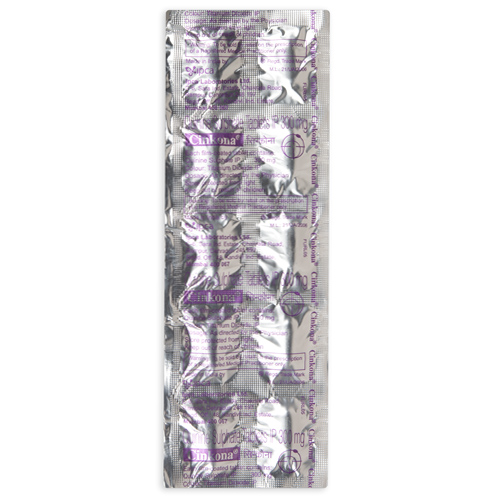
Treatment for malaria depends on breaking the life cycle of the plasmodium as well as preventing further destruction of red blood cells. Treatment is often hampered by the ability of the plasmodium to develop resistance to drugs such as chloroquine.Quinine is a natural antimalarial that is found in the bark of the cinchona tree. And belongs to the quinoline group of drugs. Quinine sulphate is a synthetic form of natural quinine and is used to treat malaria by acting as blood schizontocide that kills the schizont stage of the plasmodium parasite. Quinine sulphate also causes the accumulation of haem, a product of red blood cell production that is toxic to plasmodium and causes its death; this also prevents spread of infection.
Atovaquone and proguanil are both antimalarials that work by blocking nucleic acid synthesis and thereby inhibiting the replication of the schizont phase of the plasmodium parasite once inside the red blood cells. This prevents further destruction of red blood cells and also prevents spread of the parasite. Atovaquone and proguanil are usually combined in a single medication as they act synergistically to enhance the antimalarial effect.